Native Mobile App Design - Aptive's first in-house field service app
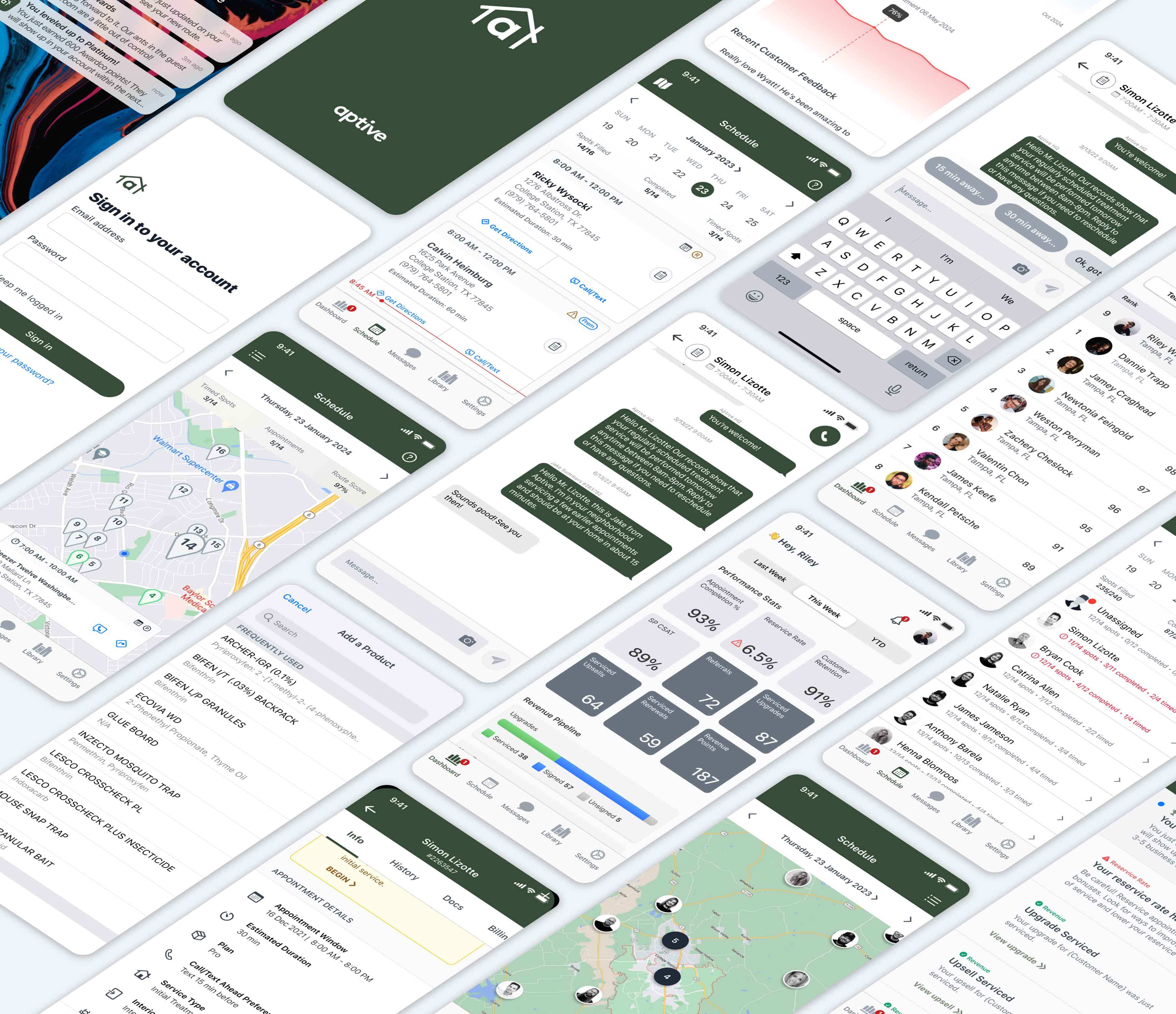
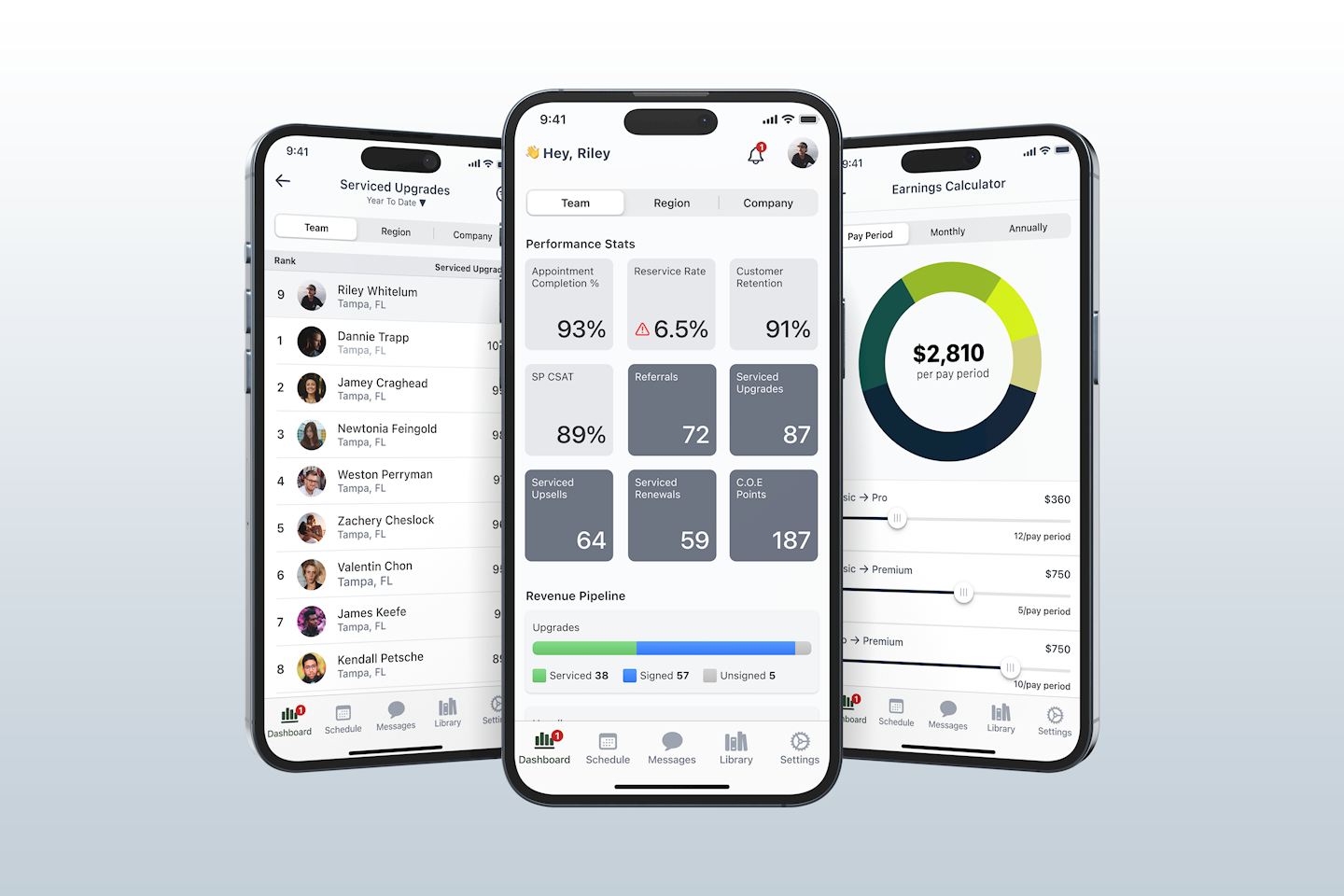
How I designed Aptive's first in-house field service app and created new revenue generating features that brought in big gains.
- Client
- Aptive Field Ops
- Year
- Service
- Native Mobile App Design
- Additional Revenue Impact first full year (2023)
- $5.7M
- Additional Revenue second year (2024)
- $13.7M
- Decrease in customer attrition in first partial year (2022)
- 9.6%
- 1st year adoption from previous vendor solution (2022)
- 98%
The Problem
Aptive initially used off-the-shelf CRM and field operations software like most pest control companies. However, as they scaled, it became clear they needed a more robust solution—either upgrading to advanced software or creating their own.
Exploring options revealed two insights: Aptive’s expertise in pest control outpaced vendor offerings, and key features that could drive revenue were often declined or overlooked as vendors catered to smaller clients.
The Solution
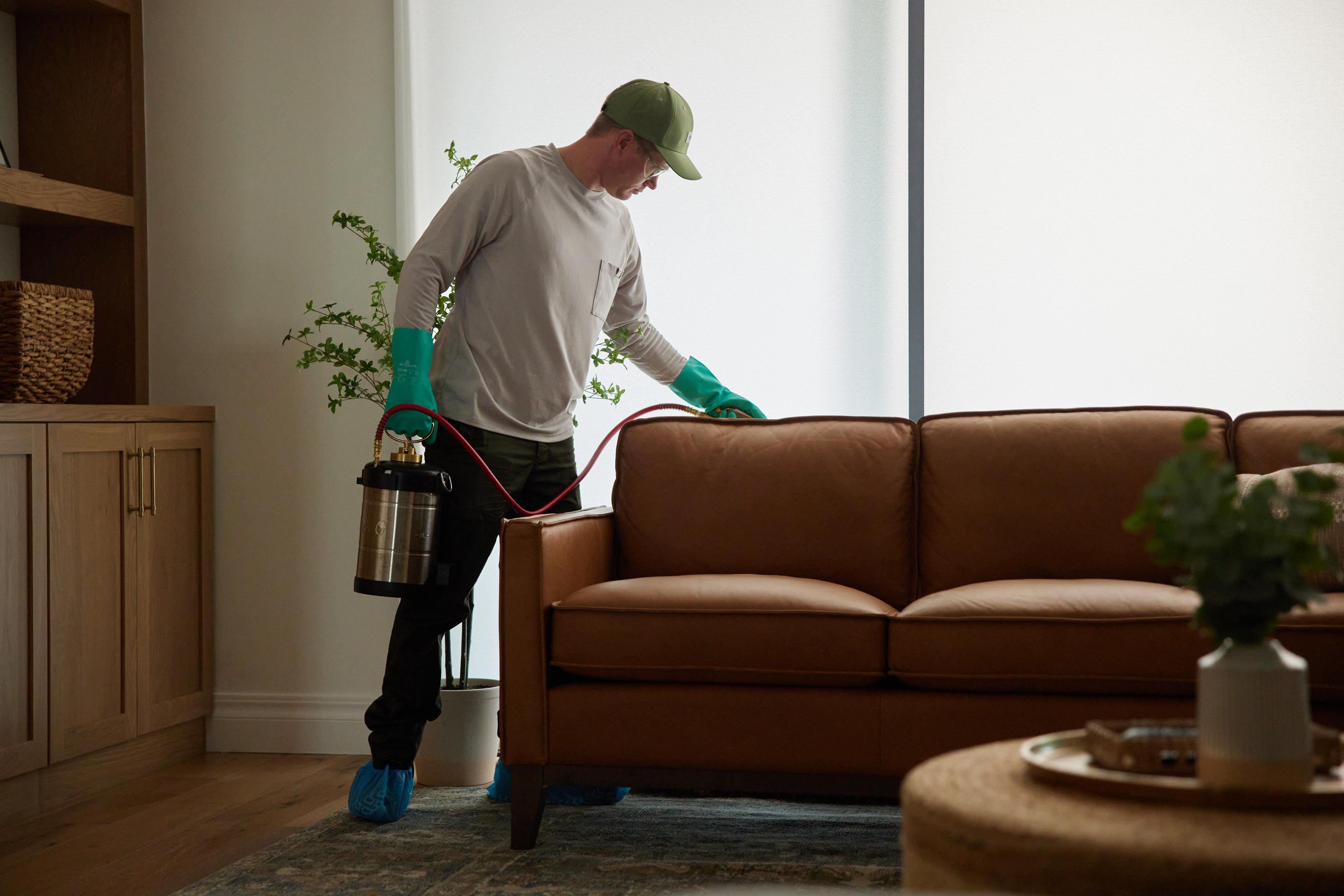
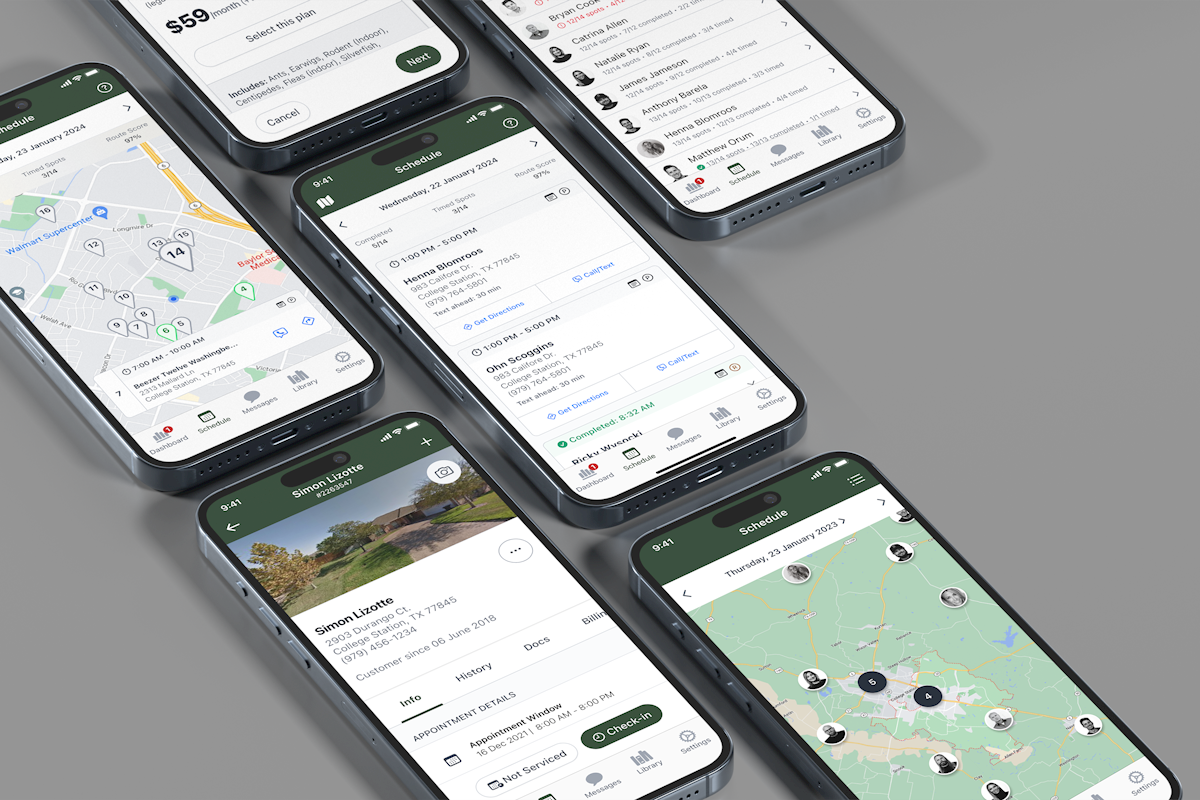
Despite consistent feedback about technicians disliking the off-the-shelf app, in October 2020, I conducted a comprehensive field-wide survey to evaluate its impact on daily operations. I also visited several U.S. service centers to shadow technicians, uncovering that the app not only hindered efficiency but also encouraged poor practices in servicing homes. Repeated feature requests further emphasized its limitations. By late 2021, we piloted the first version of our custom field service app, completing the full migration by the end of 2022.
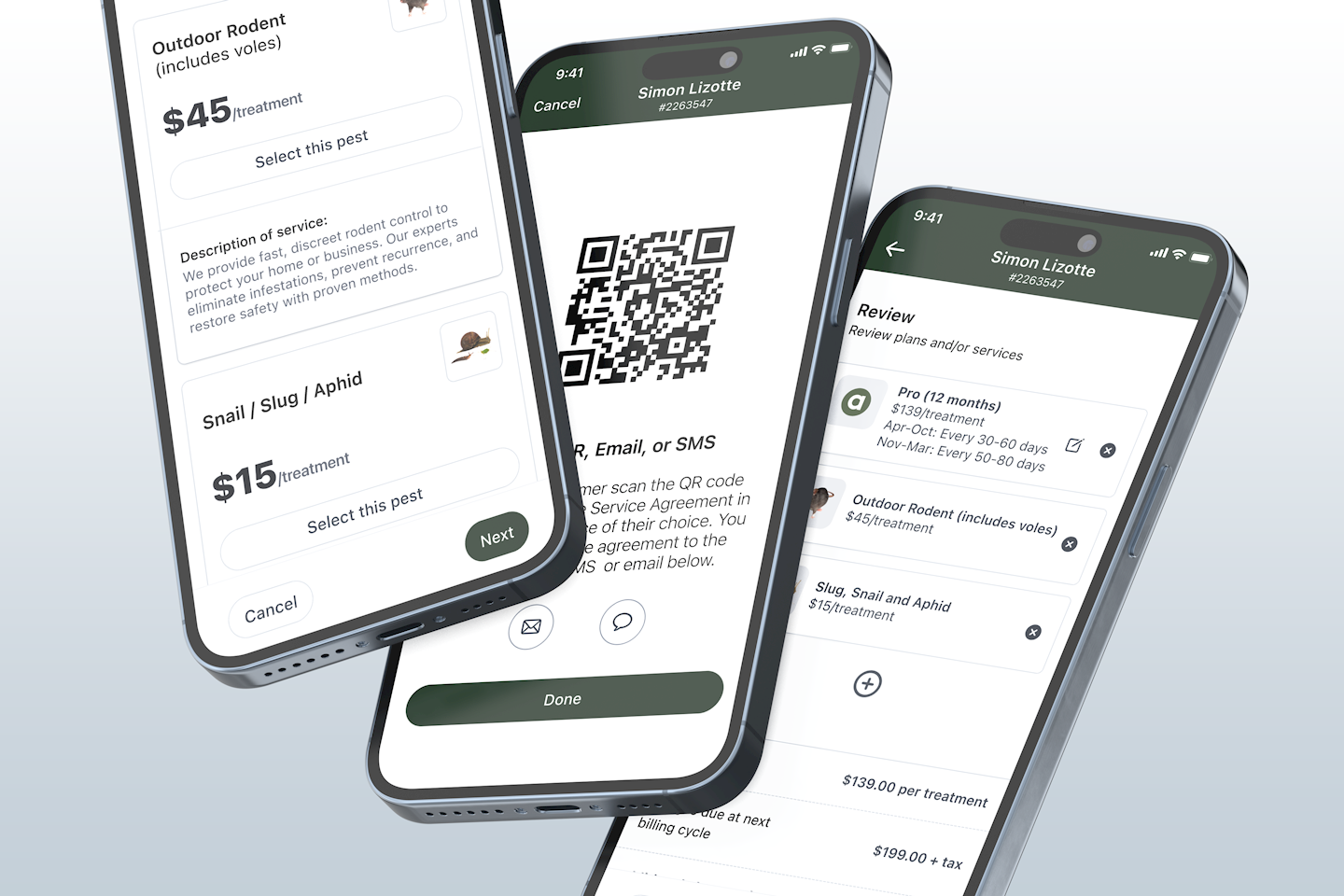
One standout feature I designed allowed technicians to sell upgrades directly to customers during appointments, earning sales commissions. By the end of 2023, this feature alone generated $5.7M in revenue and reached $13.7M by the end of 2024 (140% growth). Additionally, customer attrition dropped 9.6% when renewals occurred through the app rather than over the phone.
The team when I started in late 2021
• Product Manager
• Product Designer (me)
• One iOS Developer
• One QA Engineer
• One Backend Developer
= 5 team members
The team two years later
• Product Manager
• Product Designer (me)
• 4x iOS Developers
• 2x QA Engineers
• 4x Backend Developers
= 12 team members
What I did
- User Testing
- Native Mobile App Design
- Survey Studies
- Journey Mapping
- Empathy Mapping
- Nationwide Contextual Inquiry & Research
- Mobile Design System
- Company first in-house field service app